Independent creative studio · Johannesburg

Imagine
worlds.

From what if to what’s live.

We turn ambitious ideas into things people can see, experience and remember. Strategy, creative, AI film, websites and brand experiences, all made under one roof.

The Short Version

We think it. We make it. We make it matter.

An idea can start with a conversation, a business problem or a completely unreasonable ambition. Wherever it starts, we bring the thinking and the making together.

Six disciplines. One creative brain.

01
🎬
AI Film & Video

Big-screen thinking. New-school production.

From brand films and campaign films to social content, we turn scripts and ideas into moving pictures. AI-assisted, creatively directed and finished by people who care about every frame.

02
🌐
Web Experiences

Your website has a job. Looking good is only part of it.

We build digital experiences with something to say. Strategy, copy, design and development, working together to turn visitors into believers, customers and curious people who stick around.

03
◈
Brand Identity

Look like yourself. Sound like yourself. Be unmistakable.

We create brand identities that give businesses a recognisable point of view, from the visual language to the verbal one. We also develop the creative systems that help AI produce on-brand content.

04
🧭
Strategy

Before the big idea, there should be a good reason.

We find the human insight, commercial opportunity and cultural tension that give brands something meaningful to say. Then we turn that thinking into positioning, platforms and campaigns.

05
✦
Synthetic Characters

Meet your brand’s new favourite personality.

We create original AI-powered characters with their own look, personality and voice. Built to appear across content, campaigns and digital experiences, not just look interesting in one picture.

06
🗣
Indigenous Language Storytelling

Your audience doesn’t live in one language. Neither should your brand.

We create and adapt brand content across all nine of South Africa’s indigenous languages, bringing cultural understanding and authentic expression into the work.

We set out to build a studio with a big office, a huge team and clients on three continents. So far, we've built the studio.

Right track, we think.
Explore our services

A Little About Us

We didn’t start another agency. We started a different kind of studio.

The usual creative process involves a lot of passing things around. Strategy to creative. Creative to production. Production back to creative. Somewhere along the way, the original idea gets lost in translation.

We wanted to change that.

10May60 brings strategic thinking, creative development, design, technology and production into one studio. The people who develop the idea are involved in making it happen.

Smaller team. Closer thinking. Fewer handovers. More room to make something unexpected.

Get to know the studio

The Story Behind the Name

Some ideas deserve a second life.

10 May 1960. The birthday of our founder’s father.

He spent thirty years in the civil service. A steady man with a steady job. After he passed away, the family discovered something in his books: ideas for businesses he’d wanted to start, plans he’d written in the margins, possibilities he’d never had the chance to pursue.

His birthday was also the date of his funeral.

The name 10May60 carries both ends of that story. A life, a legacy and a reminder that ideas shouldn’t spend their entire existence on paper.

This studio is, in its own way, a continuation of that thought.

Have an idea that’s keeping you up?

Good. Those are usually worth exploring.

Bring us the ambitious brief, the half-formed thought or the business problem nobody has quite figured out yet.

Let’s make something of it →
Sixty, the 10May60 Studio mascot

The People Behind the Pixels

A studio with a point of view.

We’re an independent creative studio in Johannesburg, bringing fourteen years of agency experience together with new ways of thinking, making and creating.

Small by design. Ambitious by nature.

10
May
60

10 May 1960

A name with a story. And a reason to exist.

Our founder’s father was born on 10 May 1960. Years later, he passed away on that very same date.

He had spent thirty years working as a civil servant. A dependable man who had built his life around work, family and responsibility.

After his funeral, the family went through his books and found something unexpected. In the margins were handwritten business ideas, plans and things he had imagined doing one day.

He had ideas. Plenty of them. But life had other plans.

When it came time to name this studio, there was only one choice.

10May60.

It’s a tribute to him, but it’s also a reminder of something bigger: there are ideas worth bringing to life, and there isn’t always a perfect time to start.

We decided to start.

Not Quite an Agency. Not Just a Production House.

We bring the whole creative process into the room.

10May60 is an independent creative studio working across strategy, advertising, AI-powered production, brand identity and digital experiences.

We believe the thinking and the making should never be too far apart.

That means the strategist understands the production. The creative understands the technology. The people building the website understand the story it’s supposed to tell.

It’s a more connected way of working, and it gives us more freedom to make things differently.

New Studio. Seasoned Thinking.

Fourteen years in the making. One studio of our own.

10May60 opened its doors in 2026. But the experience behind the studio didn’t start there.

Since 2012, we’ve worked across creative and strategic leadership, developing campaigns and brand platforms for businesses in financial services, insurance, healthcare, retail and FMCG.

We’ve worked with complex briefs, demanding categories, ambitious brands and the occasional impossible deadline.

Now we’re bringing that experience into a studio built around how we believe great work should happen.

14Years of creative and strategic experience.
6Connected creative disciplines.
0Unnecessary handovers between the idea and its execution.
  1. 2012The first brief. The beginning of an agency career, learning how brands work, how people think and what makes an idea stick.
  2. 2012–2026The years in between. Creative and strategic leadership across national campaigns, brands and industries. From the first insight to the final execution.
  3. 2026The studio. 10May60 opens in Johannesburg. Fourteen years of experience, a different way of working and a lot still to make.

Our Creative Process

Good work doesn’t happen by accident.

01
Think Before We Make

We get to the heart of the brief before reaching for the tools. What are we trying to change? Who are we trying to reach? What could this become?

02
Find the Idea

We look for the insight that makes the work worth doing. Then we find the most interesting way to bring it to life.

03
Make It Real

Film, design, code, AI, sound or a combination of all five. We choose the right tools for the idea, not the other way around.

04
Keep the Human in It

AI can generate. It can accelerate. It can surprise us. But creative direction, judgement and final approval remain human responsibilities.

“AI is going to replace creatives.”

AI, drawing a hand:

Our Non-Negotiables

A few things we won’t compromise on.

Imagination before imitation.

References are useful. Original thinking is better. We’d rather bring you an idea you haven’t seen before than another version of something you have.

Culture is not an afterthought.

People should recognise themselves in the work made for them. That means understanding the language, context and culture behind the audience, not just the demographic.

Craft is in the details.

The small decisions make the big difference. Every frame, every word, every interaction deserves attention.

Honesty is part of the process.

We’ll be transparent about how we use AI, what we’re delivering and what we think of the brief. Even when that means having a difficult conversation.

Have a good one in mind?

Let’s give it somewhere to go.

Start a conversation →
Sixty, the 10May60 Studio mascot

What We Bring to the Table

Six ways to make an idea happen.

From the first strategic question to the final film, we bring the thinking, creative and production together to make work that moves businesses and audiences forward.

Use one discipline. Combine a few. Or bring us a problem that doesn’t fit neatly into a box.

🎬
AI Film & Video

Make a film out of that idea.

Brand films, launch films, campaign content and social videos. We develop the creative, direct the AI production and finish the work for the screen it’s made for.

Start a brief
🌐
Web Experiences

A website should do more than exist.

We build custom digital experiences that give businesses a stronger online presence. Strategy, user experience, copywriting, design and development, all connected.

Start a brief
◈
Brand Identity

Give your business a look and a voice of its own.

From naming and positioning to logos, typography, colour and brand systems, we create identities that people can recognise and remember. We also build AI creative systems to help brands maintain visual consistency.

Start a brief
🧭
Strategy

Find the reason people should care.

Brand positioning, audience insights, communication strategy and campaign platforms. We get underneath the brief to find the thinking that gives the creative its power.

Start a brief
✦
Synthetic Characters

Give your brand a face, a voice and a personality.

We develop original AI-powered characters that can become recognisable brand assets. From character design and personality development to content production and multilingual storytelling.

Start a brief
🗣
Indigenous Languages

Speak to people in the language they live in.

We develop and adapt brand communication across isiZulu, isiXhosa, Sesotho, Setswana, Sepedi, Xitsonga, Tshivenda, siSwati and isiNdebele, alongside English.

Start a brief

Four Ways to Get Started

Pick a starting point. We’ll take it from there.

Not every business needs the same thing. We’ve created four ways to work with us, depending on where you are and what you’re trying to achieve.

Web

Starter Site

For businesses that need a sharp first website, fast.

A focused website for new businesses, side projects and specialists who need to be findable and credible online, without a big build.

  • One-page website, or up to three short pages
  • Copy shaped from your brief
  • Mobile-responsive design
  • SEO basics
  • Contact and WhatsApp links

Delivery: approximately 1–2 weeks

Let’s start small →
Web

Business Site

For founders and companies ready to look the part.

You’ve built the business. You’ve got the expertise. Now you need a website that communicates both. A custom-built online home for companies, founders, authors, consultants and specialist businesses that need a credible, professional presence without a lengthy agency process.

  • Custom website, up to six pages
  • Copywriting developed in collaboration with you
  • Mobile-responsive design
  • SEO foundations
  • Website development and launch support

Delivery: approximately 3–4 weeks

Let’s build your site →
BrandWebFilmLanguage

Launch Kit

For new ventures with something to announce.

Launching a programme, institute or new business? Don’t let the brand, website and launch film look like they belong to three different companies. We bring the essentials together into one connected launch experience.

  • Brand identity and CI foundations
  • Custom website
  • One 30–60 second launch film
  • Copywriting in up to two South African languages

Delivery: approximately 6–8 weeks

Let’s plan your launch →
FilmCharacters

Partner Production

For agencies and in-house teams that need another creative production partner.

You’ve got the client. You’ve got the brief. You need the creative production capabilities to bring it to life. We work behind the scenes or alongside your team to produce AI-powered films and synthetic characters that can be delivered under your agency’s name.

  • One AI film, up to 60 seconds
  • Script development
  • AI production and creative direction
  • Editing and sound
  • Up to two rounds of changes
  • Synthetic characters available on request
Brief our production team →

Not sure where to start?

That’s what the first conversation is for.

Tell us what you’re trying to achieve. We’ll help you work out what you need, what it could cost and how we can make it happen.

The brief: “Something nobody’s ever seen before.”

Also the brief: five references.

The Technology Is Only Half the Story

AI can make almost anything. Knowing what to make is the real skill.

We use AI as part of the creative process, not as a substitute for one.

It gives us new ways to explore ideas, develop visuals, produce films and create experiences that might once have been out of reach.

But tools don’t come up with the strategy. They don’t understand the cultural context of a campaign. They don’t know when a piece of work is emotionally right.

That’s where people come in.

We bring the creative thinking, direction and craft. AI gives us another way to make it happen.

Every project is creatively directed. Every final deliverable is reviewed by a person. And we’re transparent about where and how AI has been used.

Creative first. Technology in service of the idea.

Load shedding at 18:00.
Render finishes at 18:02.
Sixty, the 10May60 Studio mascot

Selected Projects

Enough about what we can do. Here’s what we’ve done.

A selection of websites, brand experiences and creative projects we’ve helped bring into the world.

Four live launches in our first year. More taking shape behind the scenes.

01 / 05
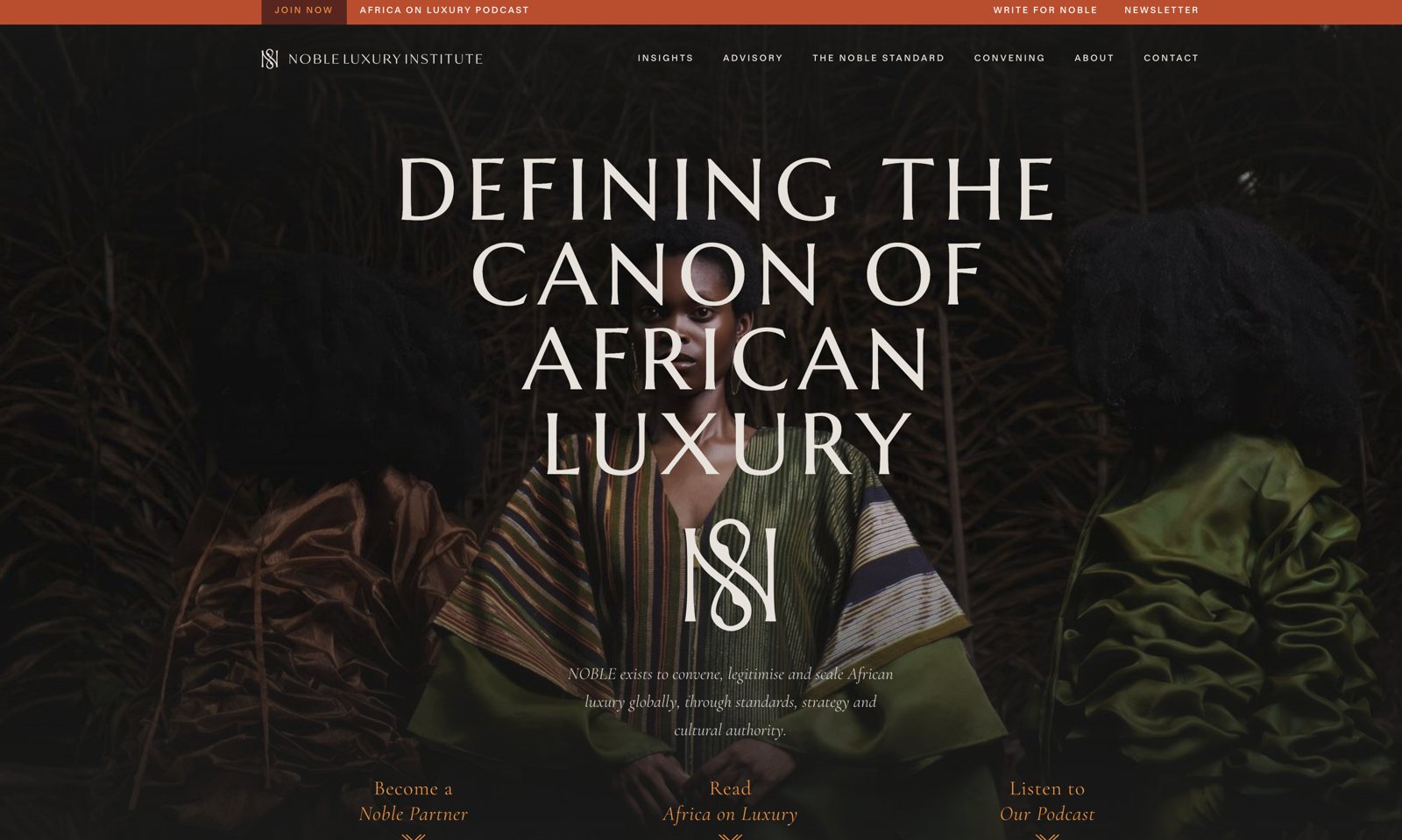
NOBLE Luxury Institute

A digital home worthy of African luxury.

Web experienceBrand digitisation

NOBLE Luxury Institute is building a new canon for African luxury. Its digital presence needed to reflect the same authority, sophistication and editorial ambition.

We developed a custom web experience built around its identity and intellectual property, bringing together editorial content, The Noble Standard, the Africa on Luxury podcast and essays published through Substack. A considered digital experience for a brand shaping an important conversation.

Visit noble.africa ↗
noble.africa
NOBLE Luxury Institute website home page
Luxury has a language.
The website speaks it.
02 / 05
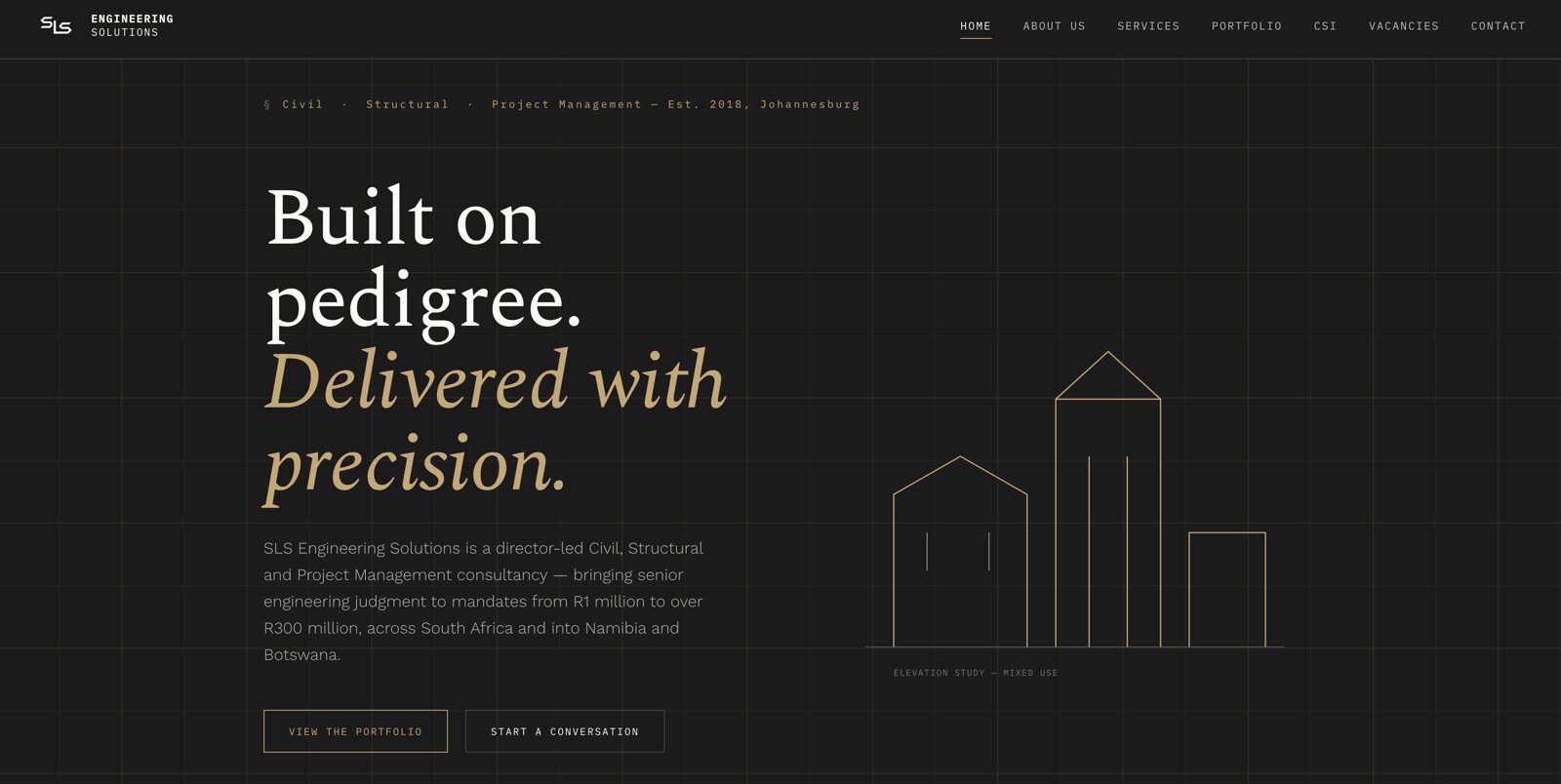
SLS Engineering Solutions

Built on pedigree. Delivered with precision.

PositioningBrand ideologyWeb experience

SLS Engineering Solutions had more than R1.1 billion in completed projects behind it. Its brand needed to communicate that level of experience and expertise.

We developed a stronger positioning around two central ideas: Built on Pedigree. Delivered with Precision. And The Director Standard, a commitment to director-led project delivery. The positioning now informs the company’s commercial strategy, brand assets and digital presence.

Visit slseng.co.za ↗
slseng.co.za
SLS Engineering Solutions website home page
When the work speaks volumes,
the brand should too.
03 / 05
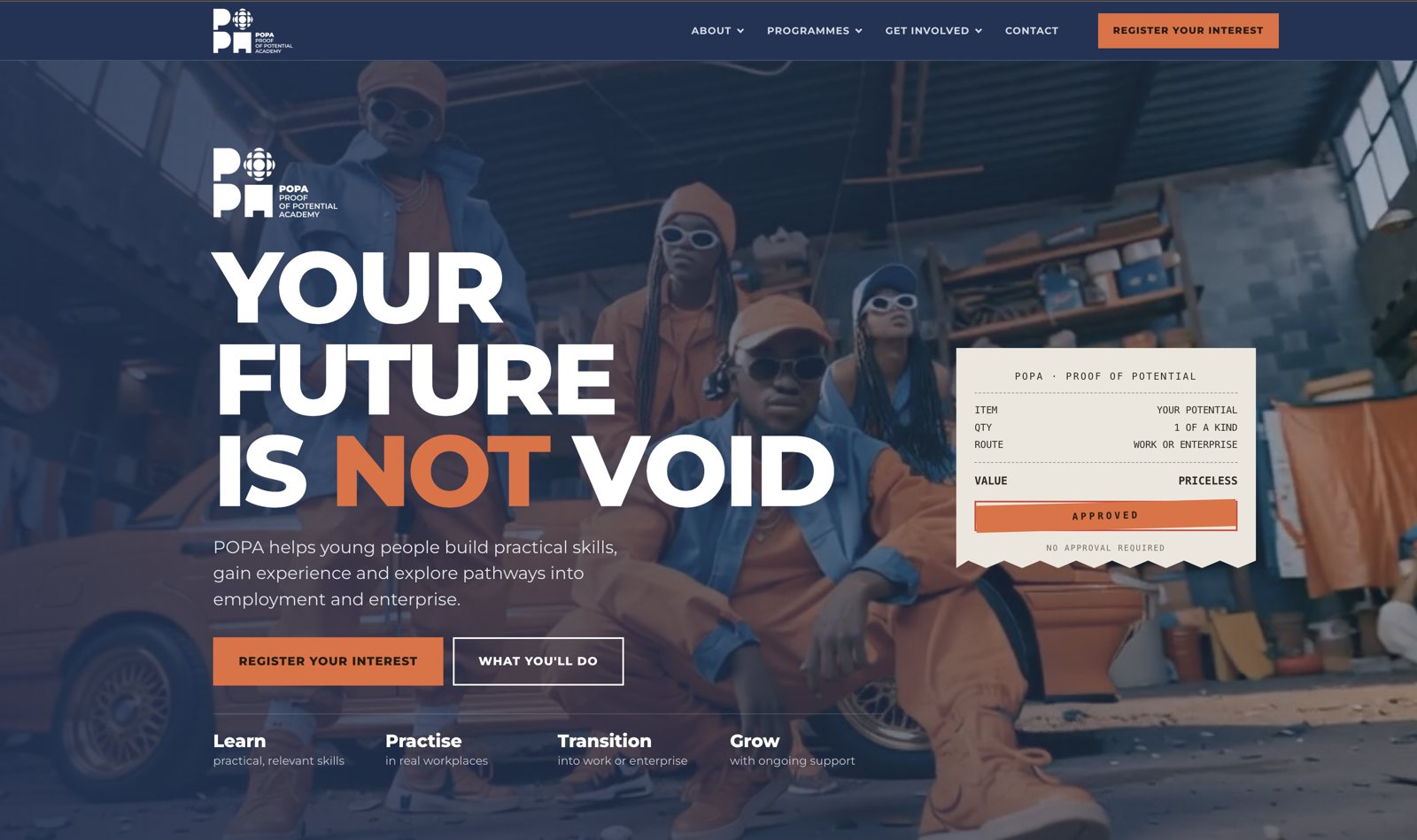
POPA, Proof of Potential Academy

Potential doesn’t need permission.

Web experienceHero film

Mafoko Global launched POPA, a skills and employment programme designed for young South Africans. The challenge was to create a digital home that reflected the ambition of the programme and the people it serves. Not another institutional-looking website speaking about young people as statistics.

We developed an online experience with the energy, confidence and optimism of a generation determined to create its own opportunities, supported by a hero film.

Visit popa.africa ↗
popa.africa
POPA, Proof of Potential Academy website home page
Built for potential that
refuses to sit still.
04 / 05
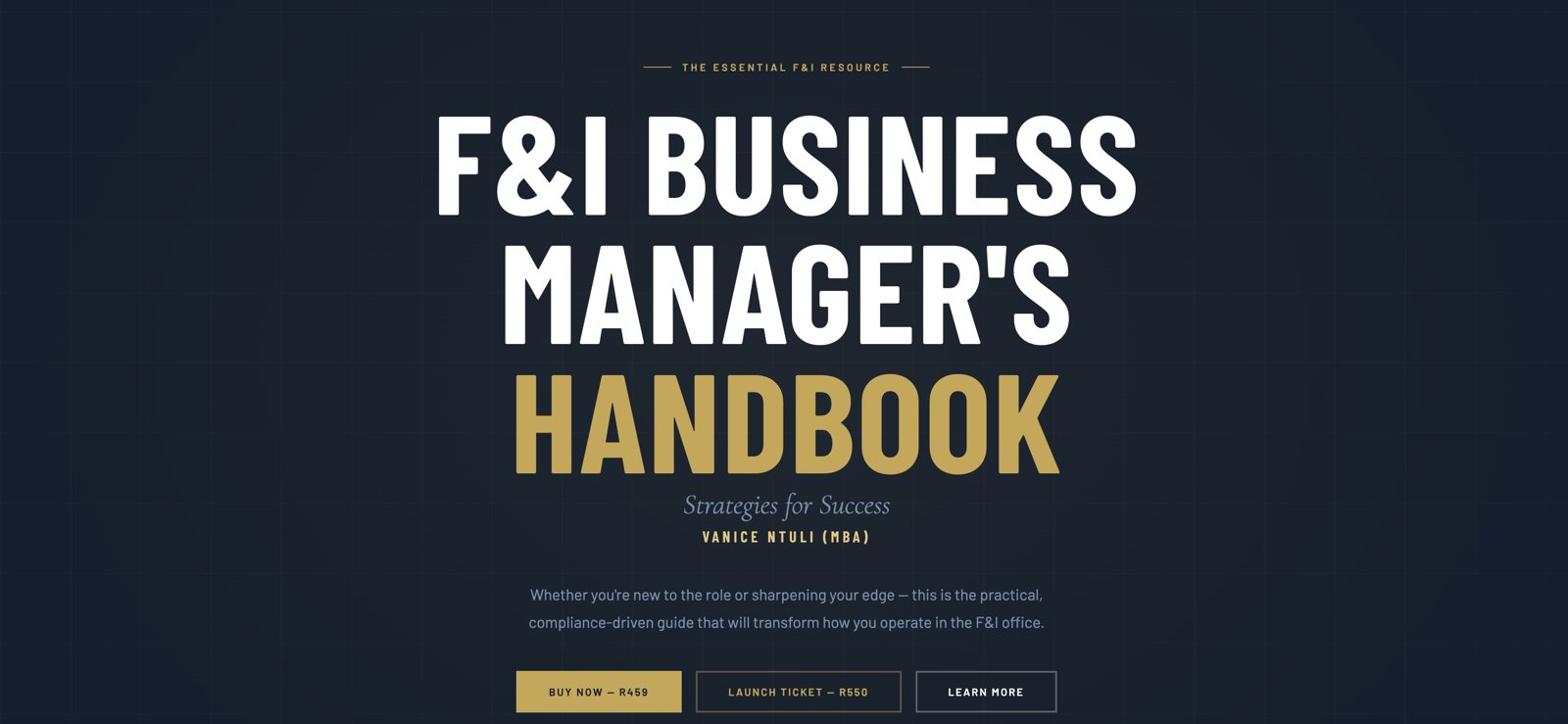
The F&I Handbook

A book full of expertise deserves more than a checkout page.

Web experienceE-commerce

Vanice Ntuli is writing the book on F&I business management. Literally. We developed a digital platform that brings together the book, its author, the launch and the depth of knowledge behind the publication.

The result is more than a place to buy a book. It’s a digital home for a body of expertise and the professional thinking behind it.

Visit fandihandbook.co.za ↗
fandihandbook.co.za
The F&I Handbook website home page
More than a book.
A whole body of knowledge.
05 / 05
Your project could be here

We saved you a space.

Some projects are still taking shape. Some are confidential. And some haven’t been imagined yet.

That last category is particularly interesting.

Bring us your brief →
Sixty walking, keeping the spot warm

Sixty's keeping this spot warm.

Start Something

What’s the next thing we get to make?

Tell us what you’re working on. We might just have the right combination of brains and tools for it.

Tell us about your project
Sixty, the 10May60 Studio mascot

Ideas, Opinions & the Occasional Rabbit Hole

We think about things. Sometimes we write them down.

AI, creativity, culture, language and the changing relationship between brands and people.

A collection of observations, opinions and questions from a studio that likes looking at things a little differently.

New thinking, when we have something worth adding to the conversation.

01
AI + Creativity
AI didn’t kill the creative. It changed the cost of a bad idea.

For years, brands could blame the budget, the technology or the timeline when an idea didn’t quite get there. AI is changing that equation.

When the tools become more accessible, the difference between ordinary work and extraordinary work becomes increasingly difficult to blame on production limitations.

The question is no longer simply what we can make. It’s whether we have anything worth making in the first place.

Read the article →
Told my mom I make films with AI.

“So who’s the actor?”
Nobody, Ma.
“Then who’s getting paid?”
02
Culture + Language
Most South Africans don’t speak English at home. Most advertising hasn’t noticed.

South Africa has nine official indigenous African languages, yet the majority of brand communication still defaults to English.

Translation isn’t the same as cultural understanding. And reaching someone isn’t necessarily the same as connecting with them.

There is a significant opportunity for brands willing to communicate in the languages people actually live in. Not simply to be understood, but to be felt.

Read the article →
03
The Future of Brands
Your next brand ambassador might not be human.

Imagine a brand character that can appear in your campaign, front your content, speak multiple languages and maintain a consistent personality across every platform. Synthetic characters are making this increasingly possible.

But creating a character is only the beginning. The real opportunity lies in building an identity people recognise, a personality they connect with and a presence that can grow with the brand.

The question isn’t simply whether brands will use synthetic characters. It’s who will build them well.

Read the article →
04
Digital + Experience
Is your website a website, or a world?

A website is often the first place someone meets your brand without anyone there to explain it.

It has to communicate who you are, what you do and why anyone should care. All without a salesperson, a presentation or a conversation.

Some websites give people information. Others give people an experience worth sharing. The difference starts long before the first line of code. It starts with having something meaningful to say.

Read the article →

Occasional Correspondence

Good thinking shouldn’t stay in one inbox.

Get our latest thinking on AI, creativity, culture and the things changing how brands communicate.

No daily noise. No inbox occupation. Just an email when there’s something worth sharing.

← All thinking
AI + Creativity

AI didn’t kill the creative. It changed the cost of a bad idea.

The making got cheaper. The judgement didn’t. What happens when almost anyone can make almost anything?

10May60 Studio · November 2026 · 5 min read

For most of advertising’s history, the distance between an idea and a screen was measured in money. Crews, locations, casting, weeks of post-production. A script had to survive a budget meeting before it ever met an audience, and most didn’t.

That distance is collapsing.

In April 2026, Johannesburg agency Boundless delivered Mazda’s first AI-produced commercial, a heritage film for the MX-5’s return to South Africa. One fixed camera. Drivers passing the same spot across the decades, from the late 1980s to today. Shot the traditional way, that idea needs several generations of the car, period settings, a casting call and a serious effects budget. It went from brief to final approval in under two weeks.

Coca-Cola’s 2025 remake of “Holidays Are Coming” tells the same story at global scale. A small team at Secret Level and Silverside AI worked through more than 70,000 generated clips in a single month, with versions cut for different markets. System1 scored the finished ad 5.9 out of 6 on its brand-growth index. Reviewers still called the animals under-characterised.

The making got cheaper. The judgement didn’t.

The old filter is gone

Expensive production used to do quiet editorial work. When a film cost millions, weak ideas died in pre-production because nobody could afford to make them. The budget was a filter. A blunt one, but it worked.

Take the cost away and the filter goes with it. A bad idea can now be storyboarded, generated, edited and approved by Friday, and posted by Monday. Speed has no opinion on whether the idea was worth having.

So the cost of a bad idea has moved. It used to be paid in production. Now it’s paid in attention: the audience’s, which is finite, and the brand’s reputation, which is slower to win back.

What changes for the people briefing the work

The brief carries more weight. If almost anything can be made, the question of what should be made sits with the brief. Vague briefs used to be rescued by production limits. Now they get executed exactly as written.

You can afford to see more routes. Testing three directions used to mean paying for three shoots. Now it can mean a week. Use that week. Put the brave option next to the safe one before anyone decides.

Craft still shows. The Coca-Cola reviews are the reminder: people can tell when a character has no inner life, whatever the render quality. Direction, timing, casting (synthetic or otherwise), sound and the edit are still where good work pulls away from the rest.

Where we put the time it saves

When AI takes weeks out of production, we put some of them back into the thinking. More time on the insight. More time on the script. More routes in front of the client, earlier. Every frame still gets a human sign-off, and we tell clients where AI was used.

The tools changed what a film costs. What makes a film worth watching is the same as it ever was: an idea someone cared enough to get right.
Have an idea that’s keeping you up?

Let’s make something of it →
← All thinking
Culture + Language

Most South Africans don’t speak English at home. Most advertising hasn’t noticed.

A look at the gap between the languages brands use and the languages people actually live in.

10May60 Studio · November 2026 · 6 min read

Census 2022 asked South Africans which language they speak most often at home. English came fifth.

24.4%isiZulu
16.3%isiXhosa
10.6%Afrikaans
10.0%Sepedi
8.7%English
8.3%Setswana
7.8%Sesotho
4.7%Xitsonga
2.8%siSwati
2.5%Tshivenda
1.7%isiNdebele

Fewer than one household in ten speaks English most often. Walk past a billboard, open a banking app or sit through an ad break, and you’d assume the opposite.

Why English stays the default

English is the language of boardrooms, approvals and agency decks. One version is cheaper than four. And most South Africans understand English well, so it feels safe.

Understanding is a low bar, though. People understand plenty of things that don’t move them.

What the research says

In 2020, CSA Research surveyed 8,709 consumers in 29 countries. 76% said they prefer to buy products with information in their own language. 40% said they won’t buy from websites in other languages at all. And 65% said they prefer content in their language even when the quality is poor.

That last number is the opportunity and the warning in one. People are generous to brands that make the effort. They are much less generous to brands that clearly didn’t.

Where translation goes wrong

Machine translation has come a long way. Google Translate added Tshivenda and siSwati in 2024, and that matters for access. It can help someone read a sign or a form. Writing a line that lands is a different job.

Language carries idiom, humour, respect and rhythm. How you address an elder. Which word is warm and which is cold. Many South Africans switch between two or three languages in a single sentence, so a campaign written in textbook isiZulu can sound like a government circular to the people it’s meant for.

Ran our ad through a translation app. My gogo is still laughing.

How to get it right

  1. Decide languages at the brief. Start from where your audience lives and what they speak at home, rather than adding languages once the English is signed off.
  2. Write in the language first. Native writers should create the line, with the English as a reference. Translating the final English copy word for word is how campaigns lose their jokes.
  3. Keep the idea, change the expression. The concept travels. The words, references and humour should be rebuilt for each language.
  4. Test it out loud. Read scripts with first-language speakers from the actual audience, including the generation you’re talking to.
  5. Budget for it as craft. Language work is creative work. It needs time, people and approvals like any other part of the campaign.

The brands that do this well will sound like they belong in more homes. In a country where English is fifth, that’s most homes.

Have an idea that’s keeping you up?

Let’s make something of it →
← All thinking
The Future of Brands

Your next brand ambassador might not be human.

Synthetic characters are moving beyond novelty. Here’s what happens when a brand gives its digital presence a personality.

10May60 Studio · November 2026 · 6 min read

A meerkat has been selling insurance comparison in the UK since 2009. Brightly coloured sweets have been arguing with each other in M&M’s ads for decades. Neither has ever asked for a raise.

Recurring characters are one of the most reliable tools in advertising, and one of the least used.

The numbers behind characters

System1, working with the IPA’s effectiveness database, found that campaigns using a recurring character or device are 30% more likely to increase profit gains than those without one.

Use of them has fallen anyway. Characters and similar devices appeared in 41% of IPA Effectiveness Awards entries in 1992 and 12% more recently. In US advertising, System1 puts the figure at 4%.

30%more likely to grow profit with a recurring character
41% → 12%share of IPA award entries using one, 1992 vs now
4%of US ads use one

Characters work because memory works that way. A face, a voice and a personality are easier to recall than a tagline, and they carry the brand into places a logo can’t go, like a meme, a reply or a 15-second clip with the sound off.

Why so few brands commit

Characters are slow to build and expensive to keep alive. They need years of appearances to become familiar, and every appearance used to mean animation, a voice artist, a shoot or a costume. Most brands chose the campaign of the year over the character of the decade.

What synthetic characters change

AI changes the maths. Once a character is designed properly, it can appear in a film this week, a post tomorrow and a launch next month, with the same face and voice each time. It can speak isiZulu in one market and Sesotho in the next. The cost of showing up again drops sharply, and showing up again is the whole game.

System1’s research on effective characters points the same way: the best ones build a world around themselves, give people something to repeat, and stay true to the brand. All three get easier when a character can be everywhere the brand is.

How to build one well

  1. Personality before polish. Decide what your character wants, what makes them laugh and what they would never say. Rendering comes last.
  2. Write a character bible. Look, voice, values, catchphrases and limits, documented so every film and post stays consistent.
  3. Disclose it. People should know the character is synthetic. Being upfront protects the brand and the audience’s trust.
  4. Own it properly. Make sure contracts assign the character’s design, name and assets to your brand.
  5. Give it time. Characters pay off through repetition. Plan for years of appearances, not one campaign.

We’re testing these rules on ourselves. Sixty, our mascot, walks across our homepage, turns up in our memes and fronts our films. Every lesson we learn with him, we bring to the characters we build for clients.

Plenty of brands will make a character. Fewer will make one people want to see again.

Have an idea that’s keeping you up?

Let’s make something of it →
← All thinking
Digital + Experience

Is your website a website, or a world?

A website is often the first place someone meets your brand without anyone there to explain it.

10May60 Studio · November 2026 · 5 min read

In 2006, researchers at Carleton University showed people web pages for 50 milliseconds, a twentieth of a second, and asked them to rate how appealing each one was. Their snap ratings closely matched the ratings people gave after looking for ten times longer.

The researchers also found a halo effect. That first impression of visual appeal colours how people go on to judge a site’s usability and credibility.

Your website’s first job is done before anyone reads a word.

The salesperson who isn’t there

A website is often the first place someone meets your brand alone. There’s no pitch, no presentation and nobody to explain what you meant. The site has to say who you are, what you do and why anyone should care, all by itself.

Most websites answer those questions accurately. Here’s who we are, here’s what we offer, here’s the contact form. Nobody forwards that to a friend.

What a world has

The sites people remember and share feel like places. They have a point of view and a tone of voice, and they reward a bit of scrolling. In practice, that comes down to six things.

  1. One thing, said first. A clear line at the top that tells people what you do and why it matters.
  2. A voice. Copy written before the design, so the layout serves the words, rather than words poured into boxes at the end.
  3. Proof. Real work, real names and real numbers. A world needs evidence that it exists.
  4. Something to share. A line, a film, a character or a joke. Something a visitor would send to someone else.
  5. Speed. A world that takes ten seconds to load is a world nobody enters, especially on mobile data.
  6. The visitor’s language. In CSA Research’s 2020 survey, 76% of online shoppers preferred buying from sites with information in their own language.

Where it starts

None of this begins with code. It begins with knowing what you want people to feel when they land, and what you want them to do before they leave. Answer that, and the design, the copy and the build have something to serve.

Information gets read. Worlds get sent.

Have an idea that’s keeping you up?

Let’s make something of it →
Sixty, the 10May60 Studio mascot

The Beginning of Something

Let’s make something happen.

Have a brief? An ambitious idea? A business problem that needs a creative solution?

We’re listening. Tell us what you’re thinking and let’s work out where to take it.

Send us a brief →

Get in Touch

There’s more than one way to start.

A fully formed brief is great. A voice note explaining an idea you’ve been thinking about for weeks is equally welcome.

Email

hello@10may60studio.co.za

WhatsApp

Me refreshing my inbox after you said you’d send the brief “just now”.
Location
Johannesburg, South Africa.
Working with clients locally and internationally.
What We Do
AI Film & Video · Web Experiences · Brand Identity · Strategy · Synthetic Characters · Indigenous Languages

Tell Us a Little More

What are we making?

Before We Get Started

A few things you might want to know.

Do you work with small businesses and startups?

Absolutely. We work with founders, startups, established businesses, institutions and agencies. Our Starter Site and Business Site packages are designed for businesses that need a professional digital presence without a large agency engagement.

Do you work with clients outside South Africa?

Yes. We’re based in Johannesburg and work remotely with clients in other markets. Geography doesn’t limit where we can collaborate.

How long does a typical project take?

It depends on the work. A Starter Site typically takes 1–2 weeks and a Business Site 3–4 weeks. A Launch Kit takes approximately 6–8 weeks. A standalone AI film generally takes 1–3 weeks, depending on its scope and complexity. We’ll agree on a realistic timeline before production begins.

Is AI content clearly disclosed?

Yes. We believe transparency is part of responsible AI production. We’ll be clear about where AI has been used and what has been created or directed by our team.

Can you handle everything under one roof?

That’s the idea. We bring strategy, copywriting, creative development, design, development and film production together. You don’t need to coordinate multiple suppliers to get the work done.

Which South African languages do you work in?

We work across all nine official indigenous African languages: isiZulu, isiXhosa, Sesotho, Setswana, Sepedi, Xitsonga, Tshivenda, siSwati and isiNdebele. We also work in English.

WhatsApp us